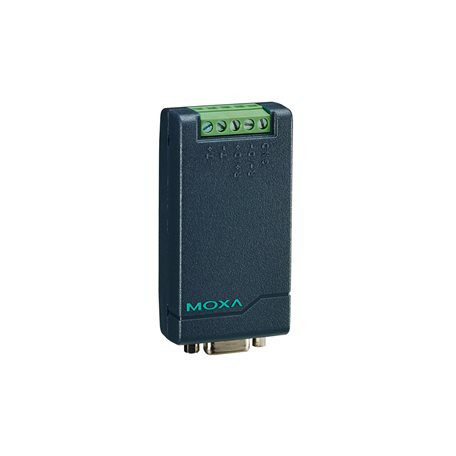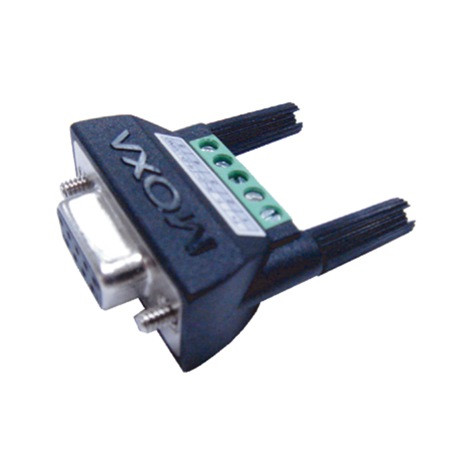



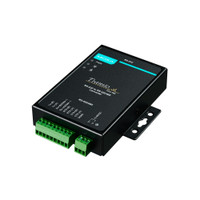
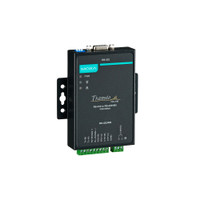

The Moxa TCC-100 Industrial RS-232 to RS-422/485 Converter is a reliable solution for extending RS-232 communication distance and integrating legacy serial equipment into RS-422 or RS-485 networks. It enables transparent conversion between RS-232 and RS-422/485 signals, supporting both 2-wire and 4-wire RS-485, as well as RS-422 with RTS/CTS handshaking.
Designed for industrial environments, the TCC-100 features a rugged metal housing, IP30 protection, and flexible mounting options for wall or DIN-rail installation. With support for baud rates up to 921.6 kbps, it is suitable for high-speed data transmission. Its Automatic Data Direction Control (ADDC) simplifies RS-485 communication by automatically managing signal flow without the need for software drivers.
The TCC-100 is powered by a 12–48 VDC input, with overload protection for improved safety and reliability. For applications requiring galvanic isolation, the TCC-100I variant provides 2 kV optical isolation to protect devices from ground loop interference and electrical surges. Wide-temperature models (TCC-100-T and TCC-100I-T) operate from -40 to 85 °C, ensuring reliable performance in extreme environments.
LED indicators for power, Tx, and Rx activity provide at-a-glance monitoring, making troubleshooting and commissioning simple. With a long MTBF of over 3 million hours, the TCC-100 is a trusted and durable choice for critical automation and control applications.
Industrial Applications
-
Transportation: Convert and extend serial signals for railway control, signaling, and traffic monitoring systems.
-
Energy & Utilities: Reliable protocol conversion for SCADA systems, substations, and water treatment facilities.
-
Manufacturing: Integrate RS-232-based PLCs, HMIs, and controllers into RS-422/485 networks.
-
Oil & Gas: Rugged converter for remote monitoring and data acquisition in harsh environments.
-
Smart Infrastructure: Enable interoperability of legacy RS-232 devices in modern serial networks for automation and surveillance.
The Moxa TCC-100 provides a cost-effective and industrial-grade method of converting and extending serial communications, ensuring seamless integration of legacy and modern systems.